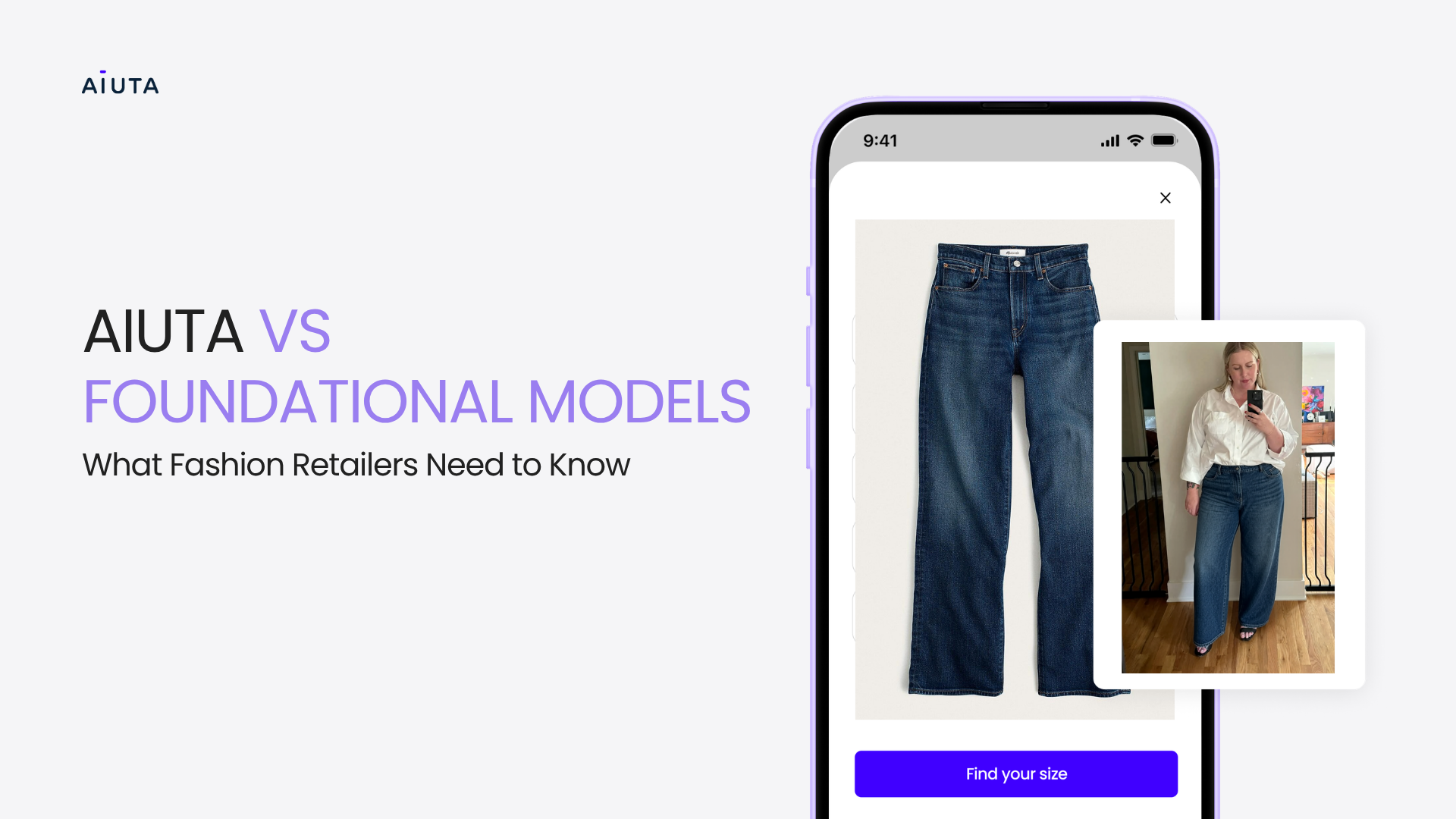
Why PDP thinking is collapsing in a world of liquid, visual, AI-driven commerce
E-commerce is not dying. It is dissolving. What is disappearing is not online shopping itself, but the mental model that has defined it for nearly two decades: the idea that the Product Detail Page (PDP) is the center of gravity where decisions are made and conversion is won. That assumption is breaking because consumer behavior has already moved somewhere else and is now fundamentally shaped by feed-based discovery, creator-driven influence, and AI-mediated visual experiences.
Today, shopping is no longer a linear journey from discovery to click to PDP to purchase. Instead, it is fragmented and distributed across multiple environments where intent is formed long before a user ever reaches a product page. This shift is not speculative. It is visible in platform data, commerce growth patterns, and attention behavior across social shopping ecosystems such as TikTok Shop and Instagram, where the interface of commerce is no longer a destination but a continuous flow.
1. E-commerce is no longer a destination. It is a feed behavior
The most important structural change in e-commerce is that discovery and purchase are merging into the same environment. TikTok Shop is one of the clearest signals of this transformation. The platform’s GMV has grown from roughly $20 billion in 2024 to over $64 billion in 2025, with projections suggesting it could surpass $100 billion within a few years (Slow Oak Studio). More importantly, over 4 million creators now participate in affiliate commerce, which means that product discovery is no longer controlled primarily by brands but distributed across creator ecosystems that behave like dynamic media networks rather than traditional retail channels.
At the same time, consumer behavior has adapted to this structure in a way that removes friction between inspiration and purchase. Research indicates that TikTok Shop mentions increased by more than 100 percent in just six months, largely driven by creator-led content outperforming traditional branded advertising (Meltwater). This creates a fundamental inversion of the traditional funnel. Instead of users going to shop, shopping now comes to users inside content environments where discovery, validation, and purchase intent form within the same scroll.
2. The PDP is no longer where decisions happen
For years, e-commerce teams have optimized under the assumption that the PDP is the most important page in the funnel. That assumption is increasingly disconnected from actual user behavior. In reality, most persuasion now happens before the click. Users encounter a product in a feed, see it demonstrated in motion, absorb social proof through creators, and form a preliminary decision almost instantly. By the time they reach the PDP, the outcome is often already strongly biased or fully decided.
Even the mechanics of attention inside PDPs reflect this shift. Industry analysis shows that product images in scroll-based environments must capture attention within approximately 0.3 seconds to remain effective, and that visual content can account for up to 93 percent of purchase influence in social commerce contexts (Rewarx). This creates a paradox for traditional e-commerce teams. While significant effort is still invested in PDP optimization, the majority of decision formation is happening upstream in feed-based environments where static page thinking no longer applies.
3. The hidden gap: what studios think matters vs. what users actually do
One of the biggest blind spots in e-commerce today is not creative quality but lack of behavioral understanding. Studio and merchandising teams still largely operate on assumptions inherited from desktop-era commerce. Hero images are assumed to be the most important asset, gallery order is treated as a key conversion lever, zoom functionality is considered secondary, and static product storytelling is still treated as sufficient to communicate value.
However, there is very little systematic understanding of how users actually interact with visual content. How long do users look at each image, when do they zoom and what triggers that action, do they scroll linearly or jump between frames, and which assets are revisited before purchase are questions that remain largely unanswered in most organizations. Without this behavioral layer, content strategy is built on intuition rather than evidence, creating a persistent gap between what studios optimize for and what customers actually use to make decisions.
4. Shopping has become a visual language, not a reading exercise
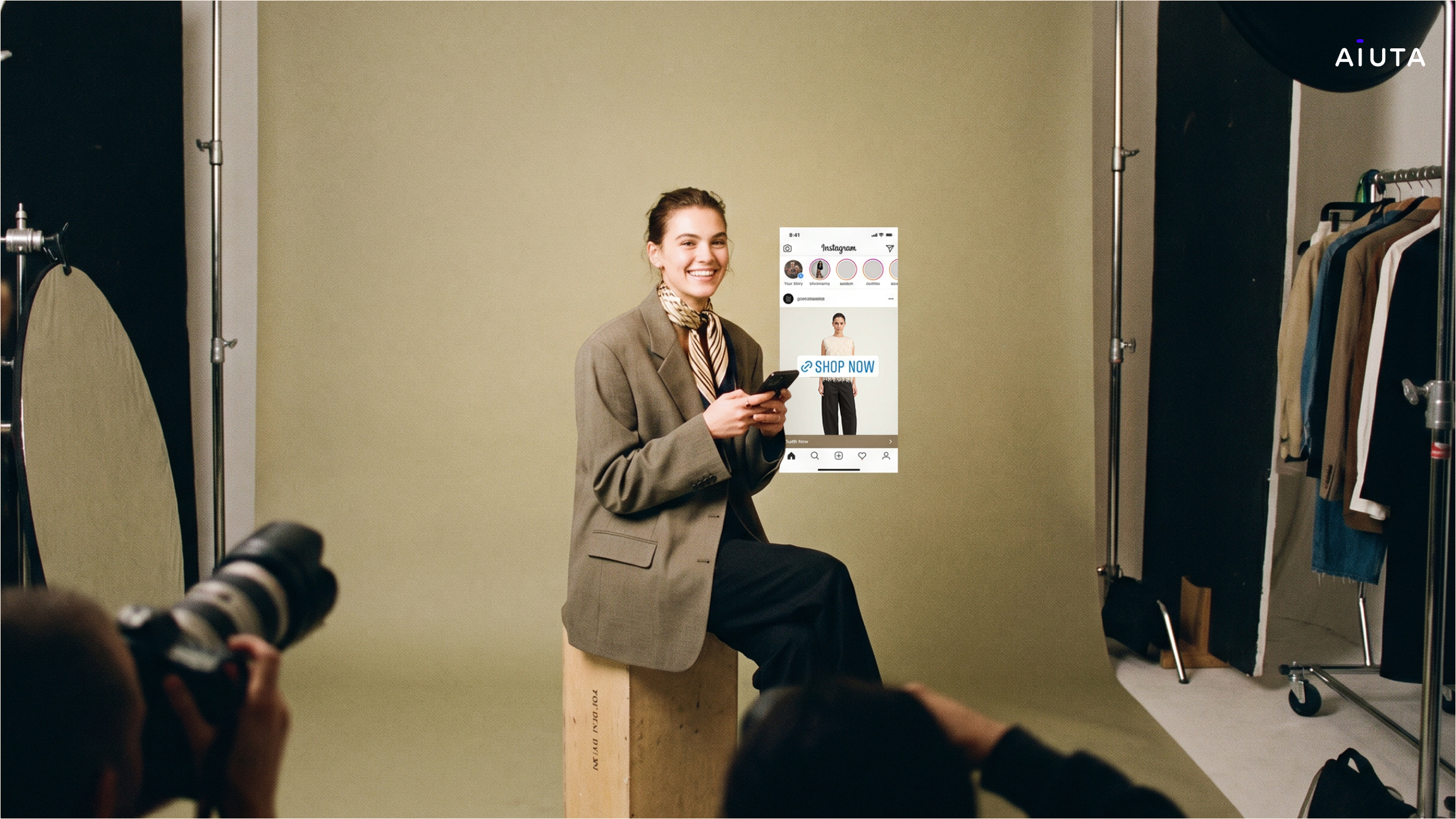
The rise of social commerce has fundamentally changed the interface of shopping. Platforms like TikTok Shop and Instagram are no longer just distribution channels but new product interfaces where content is the primary mechanism of understanding. In this environment users are not reading products, they are experiencing them through motion, context, and social validation.
This shift is particularly visible in categories such as beauty and fashion, which consistently dominate social commerce performance. Data shows that beauty alone represents nearly one fifth of TikTok Shop GMV in the US and up to a third globally in some estimates (Statista). These categories perform strongly not because of better marketing but because they align naturally with a visual-first grammar of decision making. Products that can be seen, simulated, and contextualized in motion outperform those that rely on static explanation.
This is also where technologies like virtual try-on and AI-generated content become structurally important. In a visual-first system, static representation is no longer sufficient to reduce uncertainty. Products must be simulated and rendered dynamically in order to match how users now evaluate fit, style, and relevance in real time.
5. Liquid commerce replaces static content systems
What is emerging can be described as liquid commerce, a system where product content is no longer fixed but generated dynamically depending on context. In this model a product does not have a single hero image or a fixed set of assets. Instead it has multiple contextual representations that change depending on where, how, and to whom it is shown. Content adapts across feeds, audiences, and intent signals, while try-on, styling, and variation are generated instantly through AI systems.
This represents a fundamental break from traditional e-commerce production cycles where studios create static assets intended to serve multiple contexts over long periods of time. Instead of producing content for pages, brands are increasingly producing content for systems that assemble, generate, and adapt experiences in real time. In this environment AI content generation and virtual try-on technologies, such as those being developed at AIUTA, become foundational infrastructure rather than optional creative tools.
6. TikTok Shop was not a feature. It was a behavioral reset
The success of TikTok Shop is often interpreted as a retail innovation, but it is more accurately understood as a behavioral reset. Users are now comfortable purchasing directly inside entertainment environments without transitioning into a traditional shopping interface. The integration of commerce into short-form video creates a seamless path from inspiration to purchase within the same scroll loop, eliminating the historical separation between content and commerce (Business Insider).
This collapse of boundaries means that everything becomes content, and within that content some moments convert. The implication is not just that shopping is more convenient, but that the structure of decision making itself has moved into algorithmically curated media environments.
7. The Meta perspective: e-commerce is becoming journey design
From the perspective of platforms such as Meta and Instagram, e-commerce is increasingly framed not as store optimization but as journey design. The central question is no longer how to improve the PDP, but how to construct a sequence of visual, creator-driven, and AI-generated touchpoints that progressively shape intent before the user ever reaches a product page.
In this model the PDP still exists, but it is no longer the center of gravity. It becomes one node in a broader decision system that spans feeds, creators, ads, AI-generated visuals, and immersive product simulations.
Conclusion: e-commerce is not ending. It is becoming invisible
E-commerce is not disappearing, but its structure is becoming less visible as a distinct destination and more embedded within content ecosystems. It is becoming feed-native, creator-driven, AI-generated, visually simulated, and continuously adaptive. The winners in this transition will not be the brands that perfect their PDPs, but those that understand a more fundamental shift in behavior.
People are no longer shopping pages. They are shopping moments of attention. And those moments are increasingly generated dynamically rather than designed as static experiences.
FAQ
What is liquid commerce?
Liquid commerce is an approach to e-commerce where product content and shopping experiences dynamically adapt to the context, customer, channel and intent rather than relying on fixed product pages and static content.
What is visual commerce?
Visual commerce uses images, video, interactive experiences and other visual formats to help consumers discover, evaluate and purchase products.
Is the PDP becoming less important?
The PDP is still an important part of e-commerce, but consumer decision-making increasingly happens across feeds, social platforms, creators, advertising and other digital touchpoints before shoppers reach the product page.
How is AI changing e-commerce?
AI can help brands generate and adapt content, personalise experiences, recommend products, create visualisations and enable technologies such as Virtual Try-On.
What is AI-driven commerce?
AI-driven commerce uses artificial intelligence to make shopping experiences more personalised, dynamic and responsive to customer behaviour and context.
How does Virtual Try-On fit into visual commerce?
Virtual Try-On allows shoppers to visualise products on themselves before purchasing, helping reduce uncertainty around appearance, fit and styling in a more visual shopping environment.
%20(2).jpg)