.png)
By Maisa Benatti, CEO & Co-Founder, AIUTA
Virtual Try-On has reached an inflection point. Major fashion retailers like ASOS are deploying it at scale. Consumers are returning to the experience, using it multiple times, sharing results, and incorporating it into how they shop. The novelty phase is over. VTO is becoming infrastructure.
But the version of Virtual Try-On most retailers are deploying today is still solving half the problem.
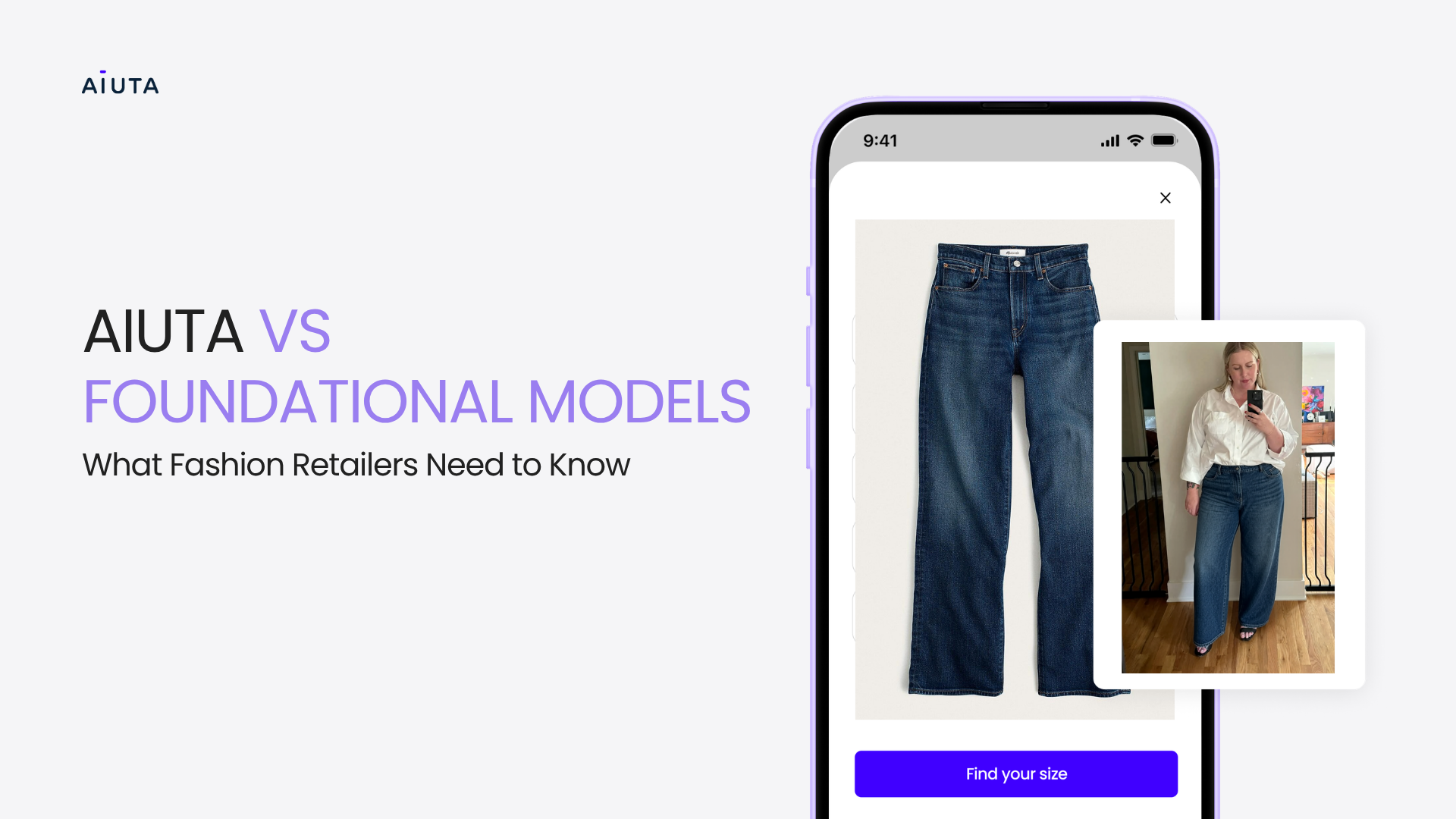
Single-item VTO answers one question: how does this product look on a body like mine? It is a meaningful question. It improves fit confidence. It reduces return rates. The data supports it.
What it does not answer is the question shoppers are actually asking when they decide to buy.
How people actually get dressed
Nobody shops for a single item in isolation. They shop for a look. They consider proportion, color, layering, how pieces work together. The decision to buy is almost always a decision about an outfit, even when only one item ends up in the cart.
This is how fitting rooms work. You do not try on one piece and leave. You build combinations. You compare options side by side on your own body. You make a decision that feels complete.
Online shopping has never fully replicated that experience. Single-item VTO got closer. But it was still a fragment of what the fitting room actually does.
What multi-item Virtual Try-On changes
Multi-item VTO lets shoppers try on a complete outfit on themselves simultaneously. Multiple garments, one session, one coherent look rendered on their own body.
The difference is not incremental. It is structural.
When a shopper can see how a jacket, trousers, and shoes interact on their own body at the same time, the decision changes. They are no longer evaluating products individually. They are evaluating a look. That is a fundamentally more complete shopping experience, and it produces fundamentally different outcomes.
The basket size case
For fashion retailers focused on average order value, multi-item VTO is one of the most direct levers available.
Traditional cross-sell and upsell logic relies on behavioral inference. Shoppers who bought this also bought that. It is a guess dressed up as a recommendation. Shoppers scroll past it because it does not feel relevant to them specifically.
Outfit visualization changes the mechanic entirely. A shopper tries on a jacket. The experience shows them how it looks paired with specific trousers. On their body. Right now. The decision to add both to cart is not a leap of faith. It is the logical conclusion of something they can already see.
Retailers like ASOS, who are deploying VTO at enterprise scale, understand this. The brands that figure out outfit-level visualization now will have a structural advantage in digital discovery as consumer expectations shift.
Why outfit recommendation is not a software problem
There is a version of multi-item VTO that looks impressive in a demo and degrades in production.
If the underlying model distorts the body to make garments look good, trust breaks the moment a shopper compares two items. The inconsistency shows. Shoppers notice it even when they cannot articulate why.
The architecture that makes multi-item VTO work at scale is body-preserving. The shopper's body stays fixed as a stable reference point. Garments render around it. That is what allows real comparison across multiple items, real confidence in how they interact, and results that hold across an enterprise catalog of thousands of SKUs, not just a curated selection.
This is the part of the technical problem the industry has underinvested in. Getting one garment to look good on a model body is solvable. Maintaining consistency and accuracy across a full catalog, on a real shopper's body, across multiple items simultaneously, is a different class of problem entirely.
What this means for the industry
I have been in this space for almost a decade. When I was leading product at Farfetch and Amazon, I kept waiting for outfit-level visualization to become real. The single-item model always felt like a compromise driven by what was technically achievable, not what consumers actually needed.
Consumer behavior is now ahead of most retailers' technology. Shoppers who have experienced good VTO want more of it. They return. They share. They expect it. As that habit deepens, the gap between single-item and outfit-level experiences will become visible to consumers in a way it is not yet.
The retailers who close that gap first will not just see better conversion and higher basket size. They will build the kind of digital shopping experience that becomes the new standard.
Multi-item Virtual Try-On is not the future of fashion retail. It is the part that was always missing.