Making a virtual try-on demo is easy. Building one that a major fashion retailer can actually put in front of customers is a very different thing.
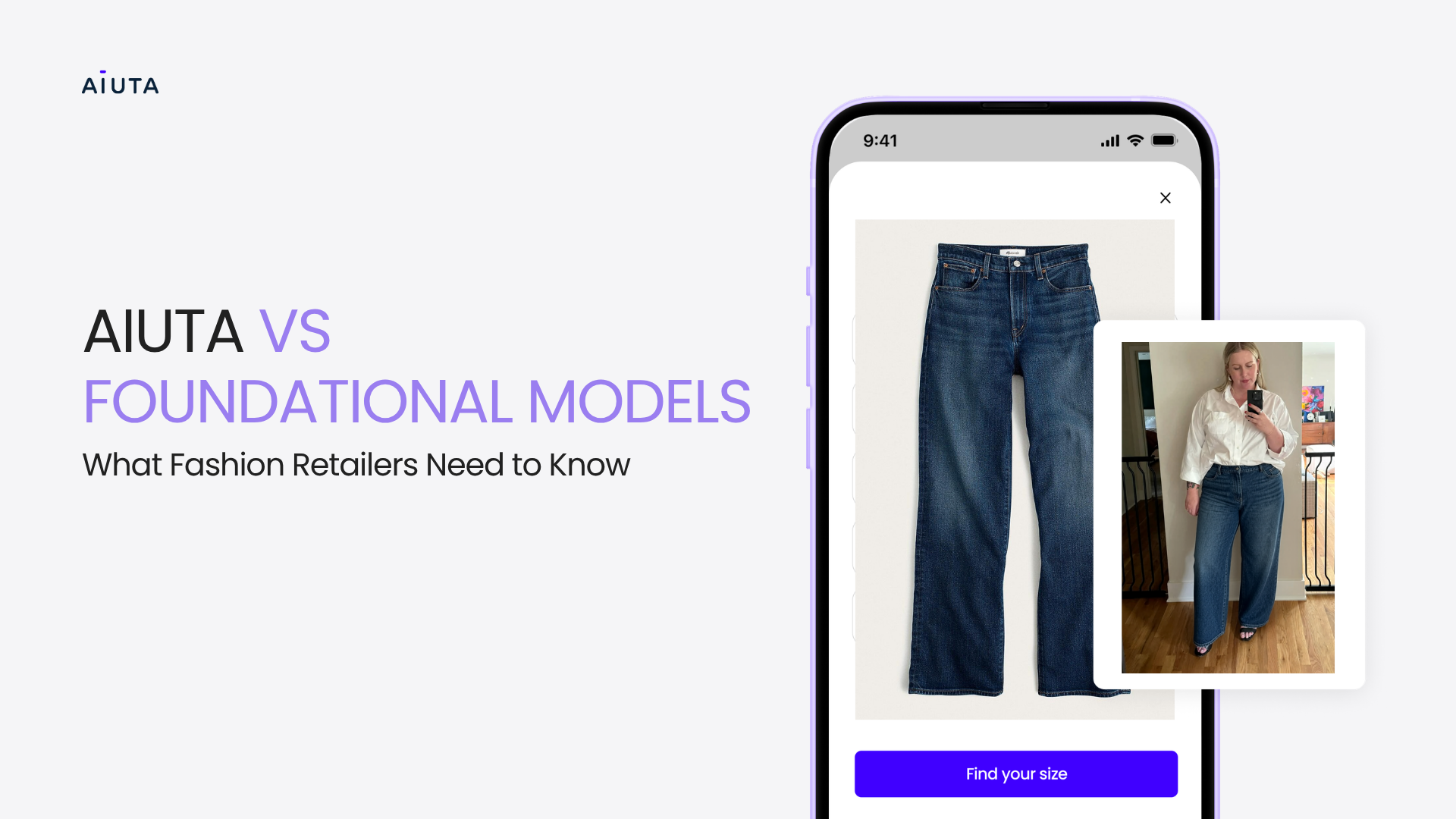
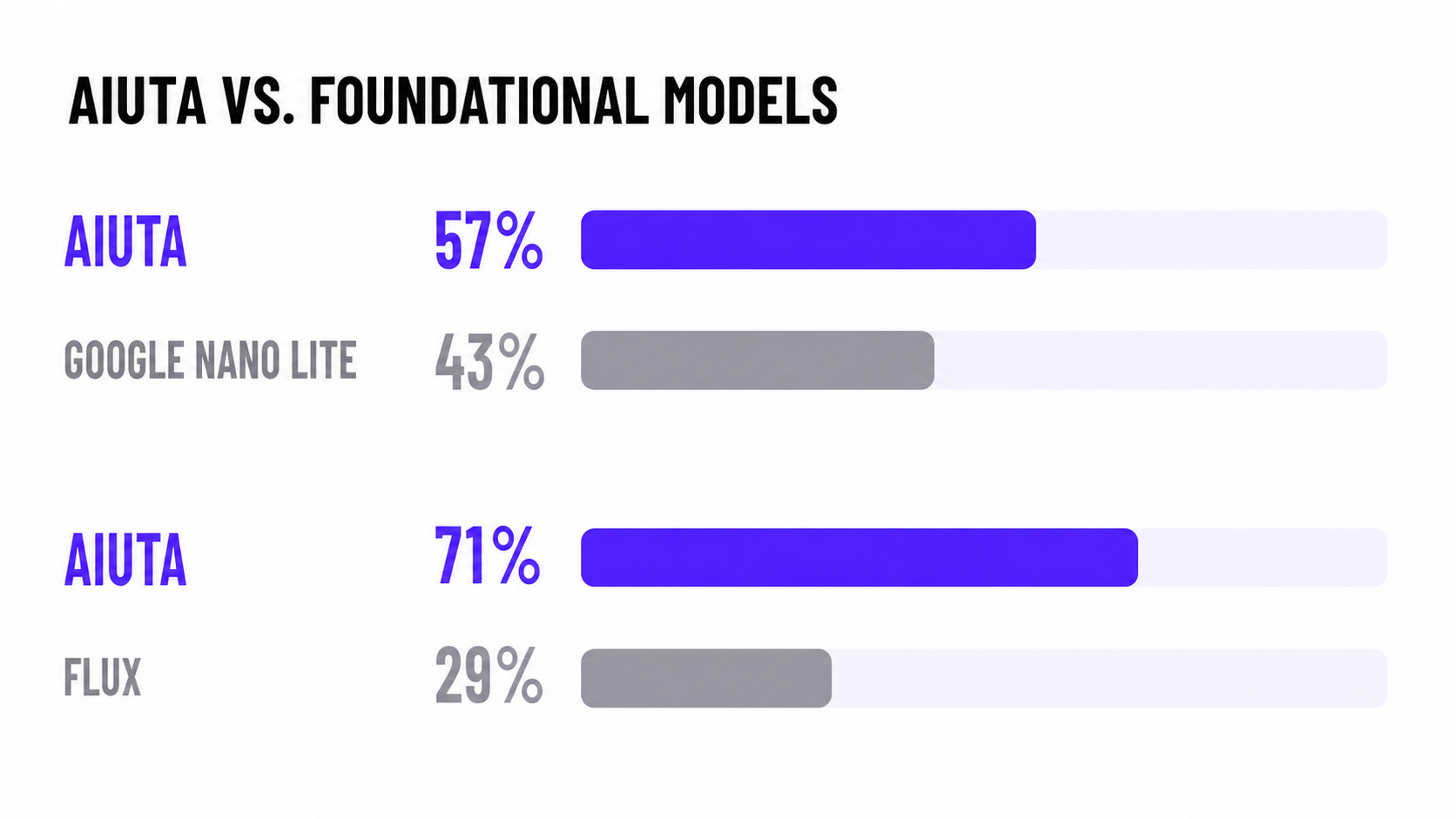
At AIUTA, we recently put our technology up against Google nano_lite and FLUX. Fashion specialists reviewed randomized outputs without knowing which system produced them.
AIUTA came out ahead.
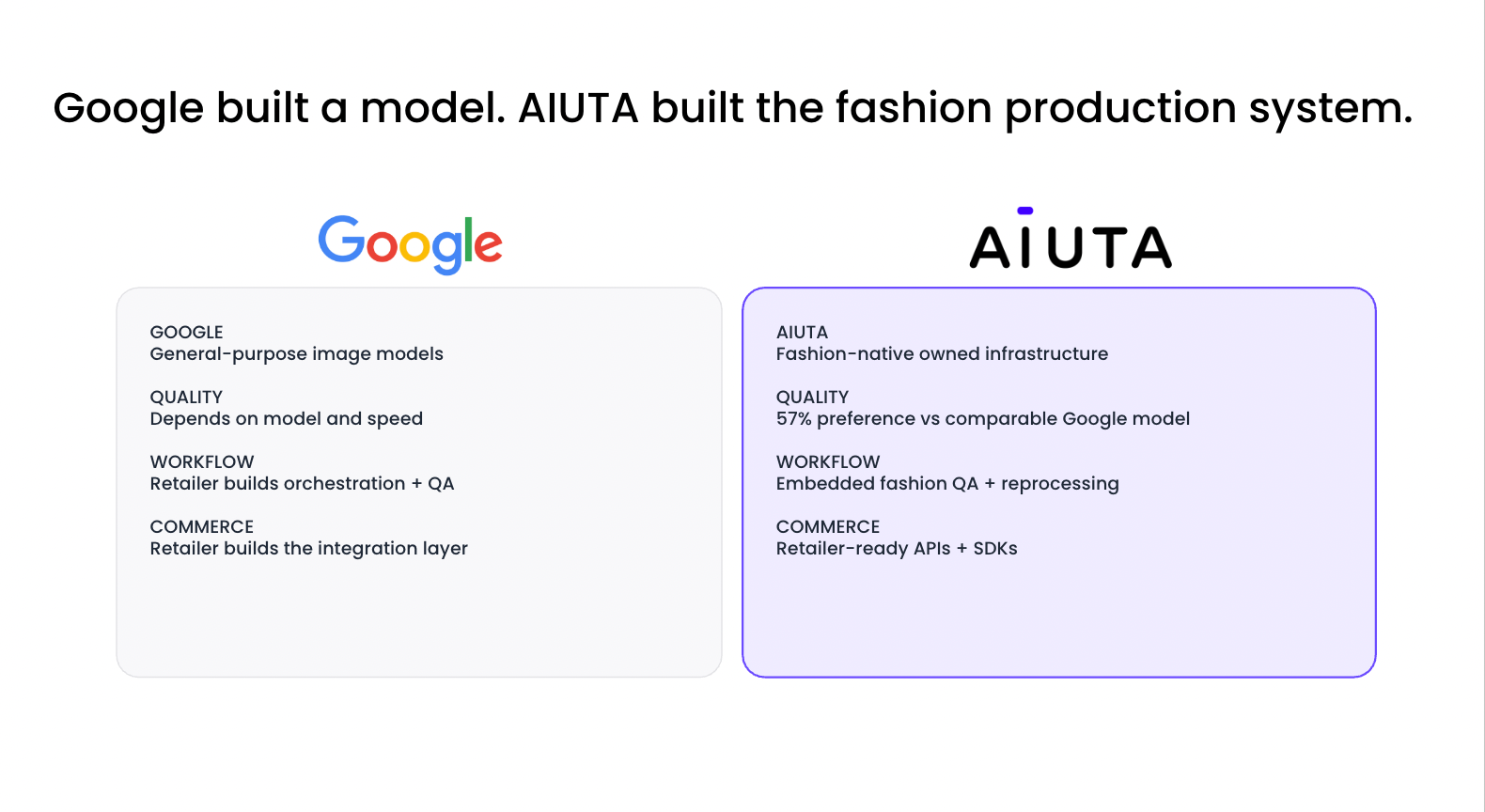
- AIUTA received 57% of decisive preferences against Google nano_lite.
- AIUTA received 71% against FLUX.
- Against FLUX, AIUTA was chosen more than twice as often.
The result points to a bigger question for fashion retailers considering virtual try-on: is access to a powerful model enough to build a production-ready VTO experience?
We don't think it is.
Why Test Foundation Models?
A growing number of fashion AI products are built on top of powerful general-purpose or foundation models. The interface may look fashion-specific, but the underlying generation capabilities, technical constraints, cost structure, and model behaviour may still belong to someone else.
That makes benchmarking important.
At AIUTA, we own and control the fashion models, orchestration, evaluation systems, and production infrastructure behind our products. If we want to understand our real technical position, we need to benchmark against the models and technologies others depend on.
The goal isn't simply to generate the most impressive image in a demo.
It is to determine whether the technology can consistently produce accurate, reliable virtual try-on experiences for real fashion shoppers.
Fashion Punishes “Almost Right”
Virtual try-on is one of those AI problems where "almost right" often isn't good enough.
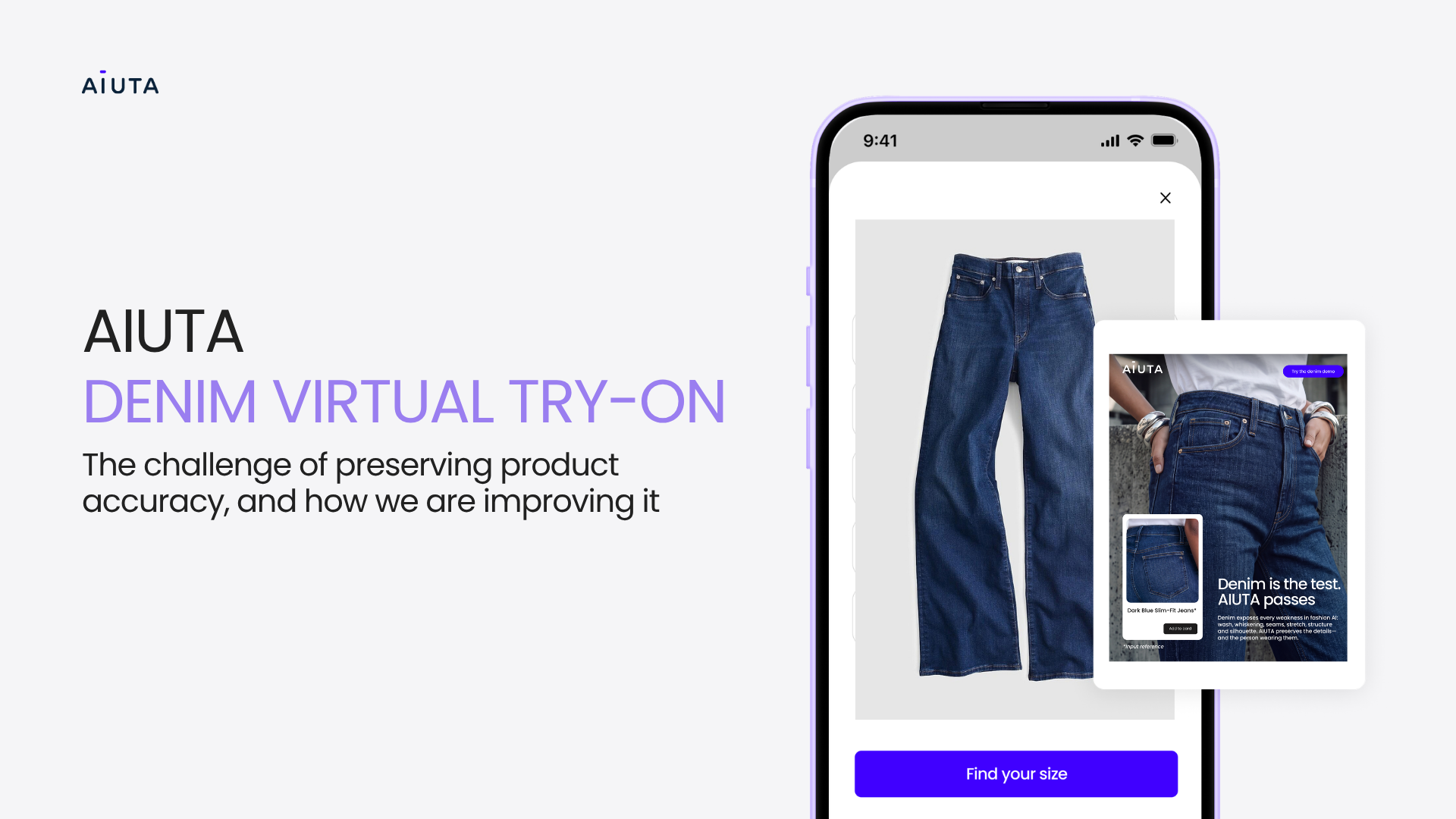
An invented pocket. A changed hem. Denim that no longer looks like denim. A logo that disappears. A face or body that shifts between images.
These aren't small creative differences.
The product is wrong, or the customer no longer looks like themselves.
That is what makes fashion virtual try-on particularly demanding. The system has to preserve two things at once:
The shopper. And the garment.
The shopper's identity, body shape, proportions, pose, and appearance need to remain consistent. At the same time, the garment needs to retain its construction, colour, texture, silhouette, details, and relationship to the body.
And it has to happen quickly.
What Makes Fashion Virtual Try-On So Difficult?
Unlike a conventional AI image-generation task, VTO has to satisfy multiple constraints simultaneously.
A production virtual try-on system needs to understand the person, understand the garment, determine how the garment should interact with the body, and generate a convincing result without introducing visual errors.
That becomes even harder as retailers introduce:
- More garment categories
- More body types and poses
- More complex fabrics and construction
- More accessories
- Multi-item outfits
- Different image formats and inputs
- Higher image quality requirements
Google itself has highlighted the complexity of accurately reproducing details such as draping, folds, stretching, wrinkles, and shadows in virtual try-on.
At AIUTA, we generate production try-ons in as little as four seconds, with our R&D environments already approaching two seconds.
Because in ecommerce, a beautiful result that takes too long isn't a great customer experience.
A Model Demo Is Not a Retail Product
Connecting to a foundation-model API is only the beginning.
A live fashion retailer needs much more than an image generator.
The system has to handle ordinary customer photos, understand the garment, orchestrate the right models, catch failures, reprocess weak results, manage traffic spikes, and deliver the experience inside an existing app or website.
What Does Enterprise Virtual Try-On Actually Require?
A production-ready VTO platform needs to solve problems across the entire customer journey.
That includes:
- Input handling: processing different shopper photos and garment images
- Garment understanding: preserving the details that make a product recognisable
- Model orchestration: selecting and combining the right technologies for each task
- Quality control: identifying outputs that do not meet the required standard
- Failure handling: regenerating or reprocessing weak outputs
- Infrastructure: supporting real traffic and large-scale usage
- Integration: connecting VTO to existing ecommerce websites and mobile apps
- Experience design: making the technology simple enough for shoppers to actually use
Someone has to own all of that.
AIUTA does.
Our platform includes fashion-specific technology, retailer-ready APIs and SDKs, multi-cloud infrastructure, UX flows tested with real shoppers, and human fashion experts continuously monitoring quality.
That is the difference between generating a promising image and operating virtual try-on at enterprise scale.
AIUTA Owns the Production Stack
The distinction matters because the technology behind the experience determines how much control a retailer ultimately has.
AIUTA's approach is built around a fashion-specific technology stack that includes our own models, orchestration, evaluation systems, and production infrastructure.
This allows us to continuously evaluate performance against the problems that matter specifically to fashion.
It also means that when a retailer encounters a new challenge, we're not limited to what a third-party model happens to support.
We can investigate the problem, test different approaches, improve the system, and feed what we learn back into the platform.
That level of control becomes increasingly important as virtual try-on moves from experimentation into the customer journey.
Every Difficult Case Makes the Platform Stronger
Every retailer brings harder garments, new categories, different imagery, and edge cases that don't appear in a clean demo.
A complex jacket.
A heavily textured knit.
A garment with intricate construction.
A different body position.
A new category.
A difficult customer image.
These are the cases that reveal whether a VTO system is genuinely production-ready.
Within each customer's data controls, those challenges strengthen AIUTA's evaluation systems, orchestration, and reusable platform intelligence.
The work doesn't disappear into a one-off customer project.
It improves the platform behind the next deployment.
This is one of the fundamental differences between building an isolated implementation and working with a technology platform that is continuously learning from production challenges.
Build vs. Buy: What Should Fashion Retailers Consider?
This is why the build-versus-buy question is bigger than model access.
A retailer can choose to:
Build on a general-purpose foundation model.
This gives the retailer control over its own implementation, but also means taking responsibility for everything around the model.
Buy a fashion interface built around third-party technology.
This can accelerate deployment, but the underlying technology and its limitations may still sit outside the retailer's control.
Work with a fashion-native VTO company that owns and operates the production stack.
This shifts the focus from building the infrastructure yourself to integrating a system designed specifically for fashion commerce.
There is no universal answer.
But the important thing is understanding what you're actually choosing to build.
The Real Cost of Building Virtual Try-On
If your plan is to connect to Google or FLUX and build the rest internally, the model itself may be only one part of the equation.
You also need to consider:
- Model evaluation
- Fashion-specific training
- Data pipelines
- Quality assurance
- Failure detection
- Image processing
- Infrastructure
- API development
- Ecommerce integration
- Performance optimisation
- Monitoring
- Scaling
- Ongoing model improvements
- Customer experience design
The question isn't simply:
"Can we generate a virtual try-on image?"
The question is:
"Can we operate a reliable virtual try-on experience for thousands or millions of shoppers, across an evolving fashion catalogue, every day?"
That is a very different technical problem.
What This Means for Fashion Retailers
Virtual try-on is moving beyond the demo stage.
Google has already brought AI-powered virtual try-on into its shopping experience and expanded it across categories including tops, dresses, pants, and skirts.
At the same time, new models and dedicated VTO technologies are making high-quality try-on increasingly accessible.
That is good for the industry.
But as the technology becomes easier to access, the real competitive advantage will increasingly come from how well the entire system works in production.
For retailers evaluating virtual try-on, the important questions are therefore not only:
- Which model produces the best image?
- How much does each generation cost?
- How quickly can it generate?
They are also:
- How accurately does it preserve the garment?
- How consistently does it preserve the shopper?
- How does it handle difficult cases?
- What happens when an output fails?
- Can it scale with our catalogue and traffic?
- How easily can it integrate into our existing ecommerce experience?
- Who owns the technology behind the experience?
- Who is responsible for improving it over time?
Those questions determine whether a VTO solution is simply impressive or genuinely useful for fashion commerce.
AIUTA Is Already Built for This
This is the difference between building a promising AI demo and building a production virtual try-on platform.
AIUTA has already built the models, orchestration, evaluation systems, infrastructure, APIs, and customer experience required to bring VTO into fashion commerce.
And we're continuing to improve it.
Don't take our word for it. Try it.
Ready to See Virtual Try-On at Enterprise Scale?
Discover how AIUTA can help your fashion business bring virtual try-on into the customer journey.
Book a Demo: https://info.aiuta.com/en-us/contact-us
Methodology
Results are based on blinded pairwise evaluations. Decisive preference percentages exclude “Both Good,” “Both Bad,” and “Can't Decide” responses.
Google nano_lite and FLUX were evaluated in separate test sets.
Google nano_lite: 200 total comparisons, of which 130 were decisive.
FLUX: 104 total comparisons, of which 78 were decisive.