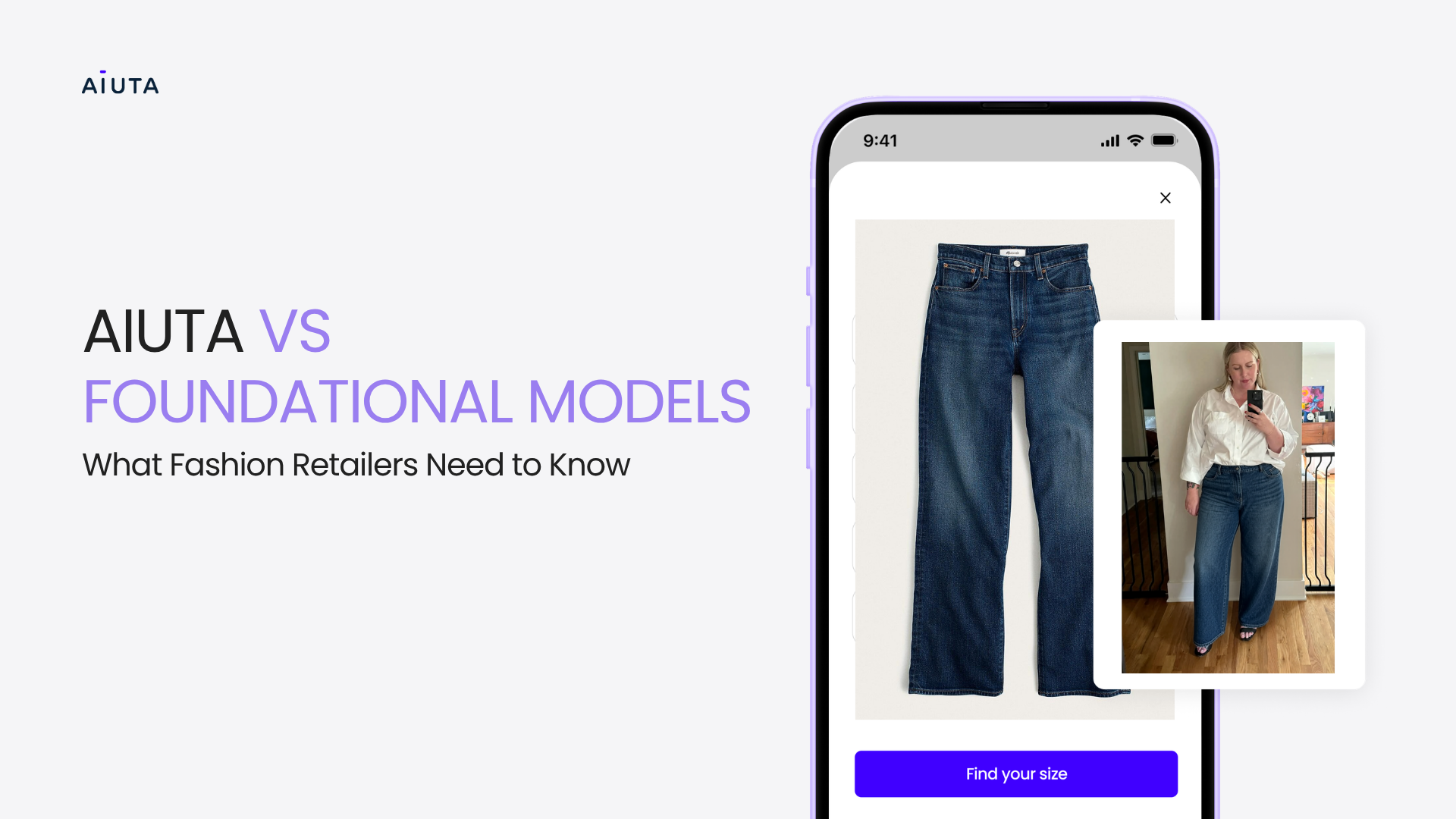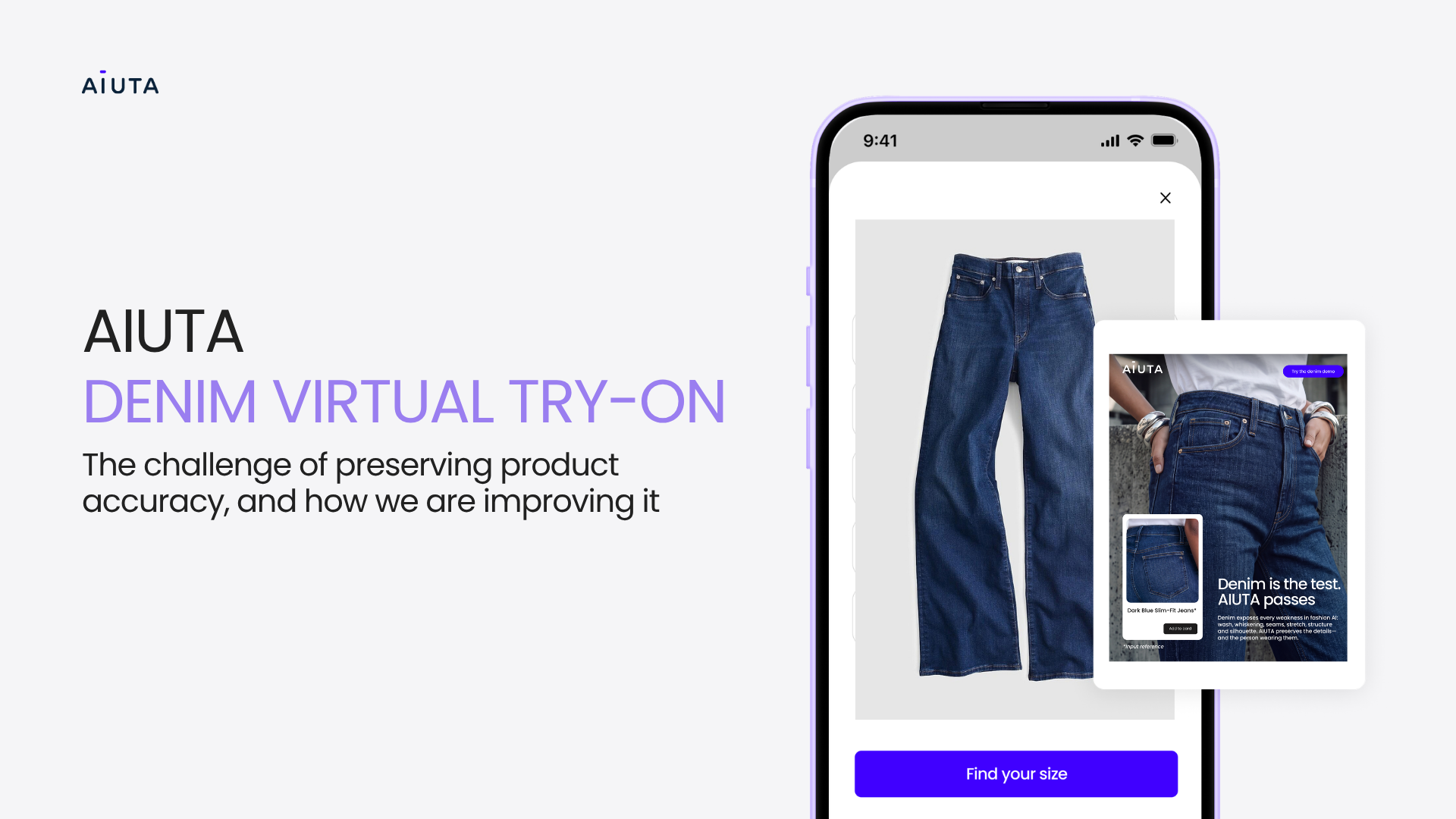
Denim is one of the hardest products for AI-powered Virtual Try-On to get right. Here's why product accuracy matters.
Size and fit are among the biggest challenges in fashion ecommerce.
According to BOF Insights’ US Fashion Consumer Outlook, 63% of US consumers said size and fit was their most important product purchasing consideration, more than any other product attribute measured. When shopping online, 41% said they were unsure about product fit or sizing.
The same research found that 23% of US consumers said customised size and fit technology would make them more likely to purchase fashion, making it the most appealing technology enhancement included in the study.
The message for fashion ecommerce is clear: shoppers need better ways to understand how a product could look and fit before they buy it.
Virtual Try-On (VTO) can help bridge that gap by showing products on a person rather than relying only on traditional product photography.
But there is a fundamental requirement:
The AI needs to get the product right first.
Why Is Denim So Challenging for AI?
Denim may look straightforward from a distance. Up close, it is one of the more technically demanding fashion categories for AI-generated imagery.
A pair of jeans is defined by a combination of:
- Wash and colour
- Whiskering and fading
- Fabric texture
- Seams and stitching
- Distressing
- Stretch and structure
- Silhouette and construction
These details are not simply decorative. They are part of the product's identity.
When AI generates or transforms an image of denim, even small changes can alter how the product looks. A slightly different wash, misplaced fading or changed silhouette can make the result visually convincing while no longer accurately representing the original garment.
This creates an important distinction for denim Virtual Try-On:
Does the AI create realistic-looking denim, or does it preserve the actual product?
Product Accuracy Is Critical in Denim VTO
Virtual Try-On adds another layer of complexity.
The system needs to take the original garment and adapt it to a person while preserving the product's defining characteristics.
That means understanding the relationship between the garment, body shape, proportions, pose and camera angle, while keeping the denim itself consistent.
For jeans, this can mean preserving:
- The original wash and colour
- Fading and whiskering patterns
- Waistband placement
- Leg shape and silhouette
- Seams and construction
- Distressing and fabric details
At the same time, the garment needs to adapt naturally to different bodies and poses.
In other words, denim VTO is solving two problems simultaneously:
How do you make the garment adapt to the person without changing the garment itself?
Why Denim Is a Useful Test for Fashion AI
This is what makes denim such an interesting category for testing fashion AI and Virtual Try-On technology.
A simple garment under controlled conditions may produce an impressive AI result. Denim creates a much more demanding test.
The technology needs to preserve a high number of product-specific details while adapting the garment to a real person.
That is particularly important for ecommerce. A shopper is not evaluating whether an AI-generated image looks plausible in isolation. They are using the image to understand a product they may actually purchase.
If the visualisation changes the product, the value of the experience is reduced.
Putting Denim VTO to the Test
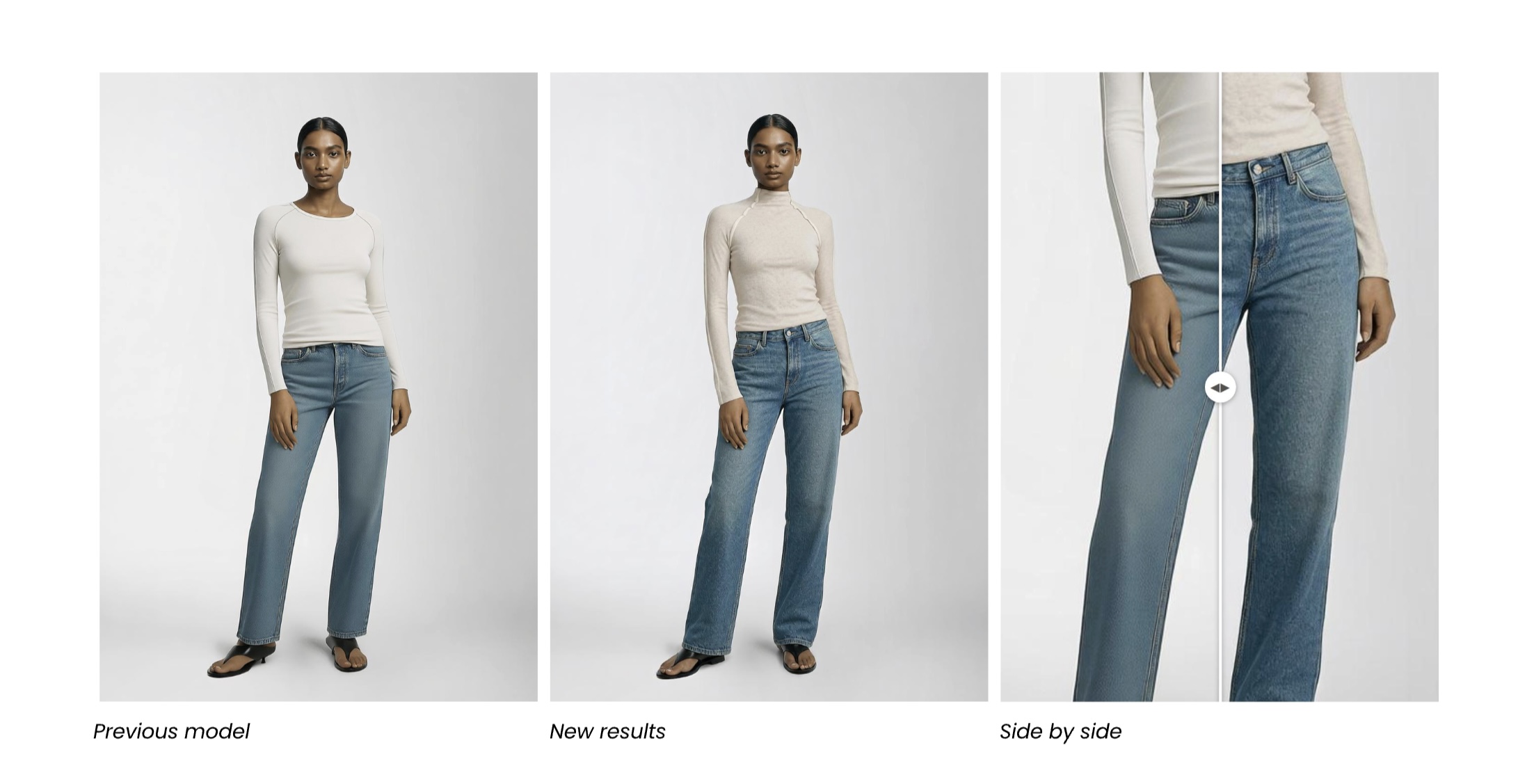
We recently put AIUTA's Denim VTO technology to the test with ASOS, focusing on how accurately denim products could be adapted to different people while maintaining the characteristics of the original garments.
The goal was simple:
Preserve the product while making the visualisation personal.
What Should Brands Look For in Denim Virtual Try-On?
As VTO becomes part of the fashion ecommerce experience, brands should look beyond whether an output simply looks realistic.
When evaluating denim Virtual Try-On, several factors are particularly important.
1. Product fidelity
Does the AI preserve the original wash, colour, texture and construction?
2. Silhouette
Does the shape of the jeans remain consistent with the actual product?
3. Body adaptation
Does the garment adapt naturally to different body shapes and proportions without changing its identity?
4. Detail preservation
Are whiskering, fading, distressing, stitching and other defining product details maintained?
5. Pose handling
Does the denim remain accurate when the person changes position or appears from different angles?
6. Consistency
Does the technology produce reliable results across different shopper images rather than only under controlled conditions?
These factors matter because shoppers are not simply asking:
"Can I see these jeans on a person?"
They are trying to answer a much more useful question:
"Can I understand what these jeans might look like on me?"
From Visualisation to More Confident Shopping
The opportunity for Virtual Try-On goes beyond creating another product image.
When shoppers are uncertain about fit and sizing, giving them a more personal way to visualise a product can help address a real point of friction in the online shopping journey.
But the visualisation has to be trustworthy.
The jeans need to look like the jeans.
The wash needs to remain the wash.
The silhouette needs to remain the silhouette.
And the shopper needs to remain recognisable as themselves.
That is why product accuracy is one of the most important considerations when evaluating fashion AI and VTO.
A realistic image is not necessarily an accurate image.
Why Denim Is the Test
There are plenty of impressive AI demonstrations.
For fashion brands, however, a more useful question is:
What happens when you give the technology your hardest product?
Denim is a good place to start because it forces AI to deal with the details that are easiest to lose while solving for what shoppers care about most: how the product looks, fits and translates to them personally.
The real test of fashion AI is not whether it can create a convincing image.
It is whether it can preserve what makes the product yours.