The conversation around AI and sustainability in fashion has quickly centred on one question: how much does artificial intelligence consume?
It is a legitimate question. AI requires electricity, data centres and water for cooling, and its infrastructure is expanding rapidly. The International Energy Agency estimates that data centres consumed around 415 TWh of electricity in 2024, with global demand projected to reach around 945 TWh by 2030, with AI among the biggest drivers of that growth.
But for fashion, there is another question worth asking:
What does AI make unnecessary?
Because fashion’s environmental footprint did not begin with AI. It comes from a physical system built around uncertainty. Brands have to decide what to design, sample, produce, photograph, distribute and promote, often months before they know what customers will actually want.
For years, the industry has managed that uncertainty by producing more.
More samples. More inventory. More physical shoots. More content. More products.
McKinsey estimates that fashion produced between 2.5 billion and 5 billion excess garments in 2023, worth between $70 billion and $140 billion in potential sales.
That is the context in which AI and sustainability in fashion should be evaluated.
Not only by the resources required to run AI, but by whether it can help fashion make better decisions before those resources are committed.
Fashion’s Sustainability Problem Starts Before the Purchase
The environmental cost of a fashion product rarely begins when someone clicks “buy”.
It starts much earlier, in the decisions made before the product reaches the customer.
A garment can go through several rounds of physical sampling before reaching production. A design is created, reviewed, modified and sampled again. Physical samples are manufactured, transported and sometimes discarded before the final product ever reaches a store or customer.
This is one area where the shift from physical to digital is already showing measurable potential.
A 2026 Journal of Cleaner Production study compared traditional physical garment sampling with virtual sampling using real factory data and a Life Cycle Assessment. Replacing physical sampling with virtual sampling reduced global warming potential and primary energy demand by approximately 85–90%, while water consumption fell by 86–91%, depending on the garment. Sample preparation time was also reduced by up to 73%.
The study focuses on virtual sampling rather than generative AI specifically. But the principle matters.
When a physical process can move into a digital environment without losing its commercial purpose, the environmental cost of that process can change significantly.
That is where AI becomes interesting for fashion.
What Virtual Sampling Can Make Unnecessary
The value of virtual processes is not simply that they are faster.
They can reduce the number of physical iterations required before a decision is made.
Instead of manufacturing every variation of a garment to evaluate it physically, teams can increasingly use digital representations to explore designs, colours, styling and presentation before committing resources to physical production.
This does not mean physical sampling disappears. Fashion will always require physical validation at certain stages.
But the question changes from:
How many physical versions do we need to make?
to:
Which versions actually need to exist physically?
That distinction matters.
If technology allows brands to eliminate even a portion of unnecessary samples, transportation and production, the sustainability benefit comes from the physical activity that no longer needs to happen.
Fashion’s Content Problem Is Bigger Than It Looks
Fashion does not only produce clothes. It produces everything around them.
Samples need to be made before they can be photographed. Products need to reach studios. Images need to be created for different markets, formats, models and campaigns. A change in creative direction can trigger another round of physical production.
The content production process itself has a footprint.
AdGreen’s 2023 industry data, based on 1,424 advertising productions, found that the average project generated 6.2 tonnes of CO₂e. For productions costing more than £50,000 per shoot day, that figure rose to 13.9 tonnes. Travel and transport accounted for 72.1% of recorded emissions, with air travel alone responsible for 60.2%.
For years, the assumption was simple: if fashion needed a new image, it needed another production process behind it.
Digital technologies are challenging that assumption.
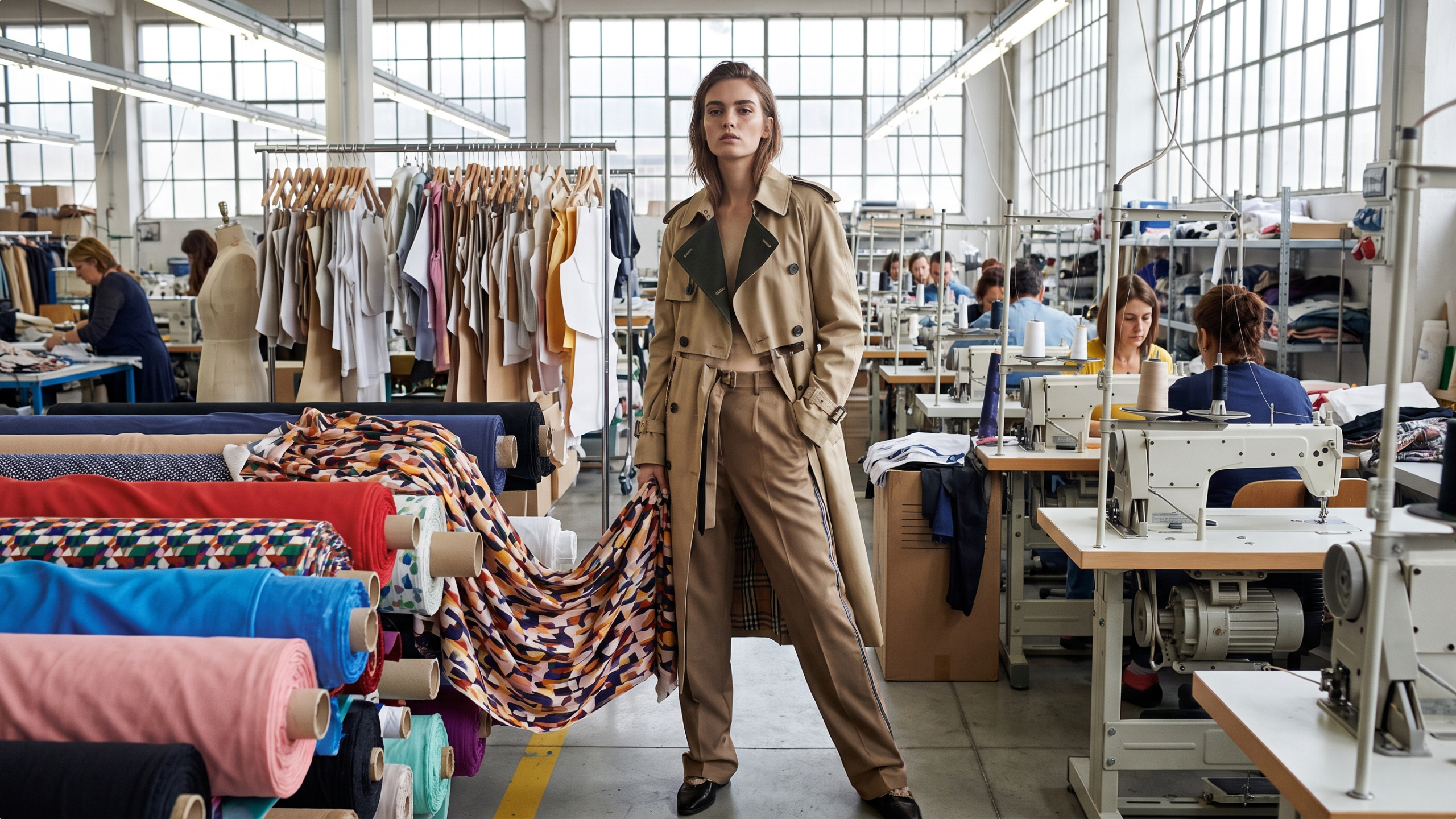
Virtual sampling research demonstrates the potential environmental difference when physical development is replaced by digital development. AI content creation extends that principle into the content layer, allowing existing product assets to be adapted across different environments without necessarily creating an entirely new physical production process for every variation.
For fashion brands, that can mean creating different visual contexts, styling directions, markets and formats from products that already exist.
But there is an important distinction.
The sustainability opportunity is not to create ten times more images simply because images are now cheaper.
That would simply replace one form of excess with another.
The opportunity is to ask which physical production processes can genuinely be removed because they no longer add enough value.
For AIUTA, this is where AI Content Creation Studio can play a role: helping brands make existing product assets more adaptable, reducing the need to repeatedly organise new locations, samples or physical shoots for every content requirement.
The goal is not more content.
It is more useful content from the products that already exist.
The Bigger Question: What Does Fashion Make Before It Knows?
Content is only one part of the equation.
The larger sustainability opportunity sits further upstream, in how fashion makes decisions before demand actually exists.
Brands still need to predict which colours, sizes and silhouettes will sell, in which markets and at what volume.
The traditional model manages that uncertainty by producing inventory and hoping the forecast is right.
When the forecast is wrong, the consequences appear later as markdowns, excess stock and products that never find a customer.
McKinsey estimates that fashion produced between 2.5 billion and 5 billion excess garments in 2023, while many brands continued to struggle with inventory positions.
Technology cannot eliminate overproduction.
But better information can reduce some of the uncertainty that makes overproduction seem rational in the first place.
The better brands become at understanding what customers want, the less they need excess inventory as insurance against uncertainty.
That is a much bigger sustainability opportunity than simply making an existing workflow marginally more efficient.
Can AI Help Reduce Fashion Returns?
There is another sustainability problem created by fashion’s shift online: customers are still making physical purchase decisions through a digital interface.
A shopper cannot touch the fabric, assess the exact silhouette or see how a garment behaves on a body like their own.
They are making a decision with incomplete information.
Sometimes they get it right.
Sometimes they do not.
In Europe, around one in five clothing items purchased online is estimated to be returned. The European Environment Agency reports that 22–43% of returned clothing can ultimately be destroyed, with around one third being the average estimate.
The EEA also estimates that 4–9% of all textiles placed on the European market are destroyed before they are ever used, equivalent to hundreds of thousands of tonnes each year.
The scale changes how we should think about returns.
The problem is not simply the parcel travelling back to a warehouse.
It is the product that has already consumed raw materials, manufacturing capacity, energy, logistics and packaging and may still never reach the person it was produced for.
The EEA also identifies poor fit and style as major contributors to online clothing returns.
That makes Virtual Try-On particularly interesting.
The purpose of VTO is not to make shopping more digital for the sake of it. It is to give shoppers more information before they make a physical purchase decision.
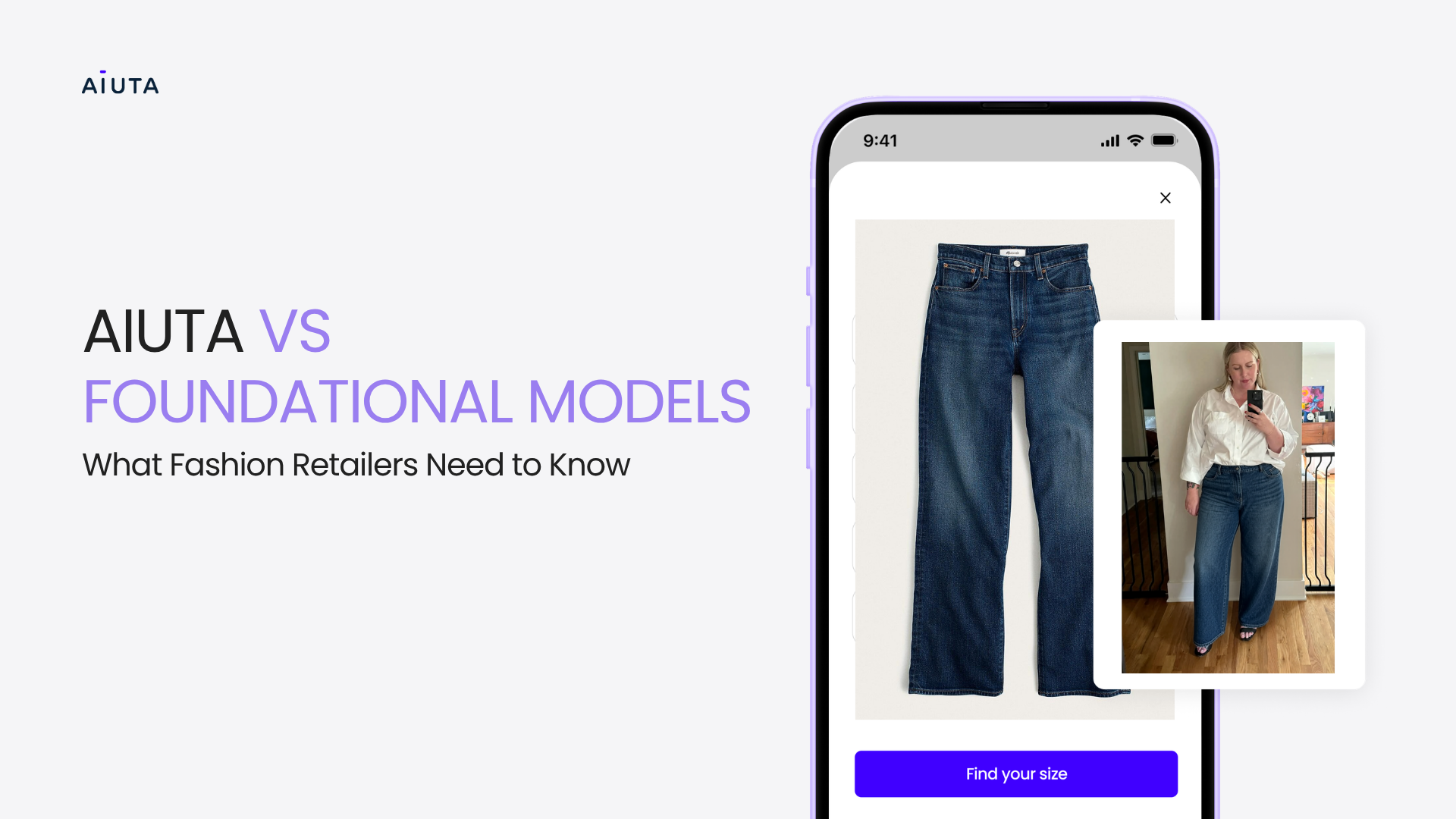
With AIUTA Virtual Try-On, shoppers can visualise products on themselves before buying. For brands using the technology, AIUTA has seen up to a 5% reduction in return rates.
One avoided return may seem insignificant.
At fashion’s scale, it is not.
The most sustainable return is the one that never happens.
From Individual Products to Complete Looks
The same principle applies to how shoppers discover products.
Fashion is rarely purchased as an isolated object. Customers think about outfits, occasions, styling and how different pieces work together.
That creates another opportunity for AI to reduce uncertainty before purchase.
Instead of asking shoppers to imagine how several separate products might look together, Outfit Virtual Try-On allows them to visualise a complete look.
This can help shoppers make a more informed decision about what they actually want before placing an order.
For retailers, the potential extends beyond individual product discovery. Showing how pieces work together can make the relationship between products more visible, helping customers discover complementary items while giving them greater confidence in the overall purchase.
The sustainability implication is subtle but important.
Better digital information can influence what gets purchased, how much gets purchased and what ultimately gets returned.
The goal is not to encourage customers to buy more simply because technology makes it easier to discover products.
It is to help them make better decisions.
AI Should Be Measured by What It Changes
There is a temptation to divide technologies into two categories: sustainable or unsustainable.
AI does not fit neatly into either.
Its environmental cost is real. Data centre electricity demand is rising, and the infrastructure behind AI needs to become more efficient.
But fashion’s physical footprint is real too.
Water. Energy. Materials. Chemicals. Samples. Factories. Warehouses. Packaging. Transport. Unsold inventory. Returns.
So the question should become more precise:
Where can AI help fashion use fewer physical resources to make better decisions?
The opportunity looks different across the value chain.
In sampling, it can move more development into digital environments before physical production begins.
In content, it can reduce the need for repeated physical production cycles and make existing product assets more adaptable.
In commerce, it can give shoppers more information before they buy, helping reduce uncertainty around fit, styling and product choice.
And across the wider value chain, better data and more responsive digital tools can help brands understand demand before committing to physical inventory.
None of this makes AI inherently sustainable.
And it should not.
The opportunity is more practical than that.
Fashion does not need another technology that simply helps it produce more, faster.
It needs technologies that help the industry understand when more production is unnecessary.
That is where the sustainability story of AI becomes genuinely interesting.
Not in creating more with less, but in helping fashion make better decisions about what needs to be created in the first place.
Making less of what was never needed. Making better use of what already exists. And moving more of fashion’s uncertainty into the digital world before it becomes physical waste.
Frequently Asked Questions
Is AI sustainable for the fashion industry?
AI itself has an environmental footprint through electricity, computing infrastructure and data centre resources. Its sustainability potential depends on how it is used. In fashion, one opportunity is using AI to reduce unnecessary physical production, sampling, content creation and returns.
Can AI reduce fashion waste?
AI cannot eliminate fashion waste, but it can help reduce some of the processes that contribute to it. Digital sampling, AI content creation, demand intelligence and Virtual Try-On can help brands make better decisions before committing physical resources.
Can Virtual Try-On reduce fashion returns?
Virtual Try-On can give shoppers more information about how products may look on them before purchase, potentially increasing purchase confidence and reducing returns. AIUTA has seen up to a 5% reduction in return rates among brands using its Virtual Try-On technology.
How can AI reduce physical production in fashion?
AI can help move certain processes from physical to digital environments. Examples include virtual sampling, creating multiple content variations from existing product assets and visualising products on shoppers without requiring additional physical samples or shoots.
What is the biggest sustainability opportunity for AI in fashion?
The biggest opportunity may be reducing unnecessary production. Instead of simply helping fashion produce more efficiently, AI can help brands make better decisions about what needs to be produced, photographed, sampled or shipped in the first place.
%20(2).jpg)